Get the insurance before the car (your wallet will thank you)
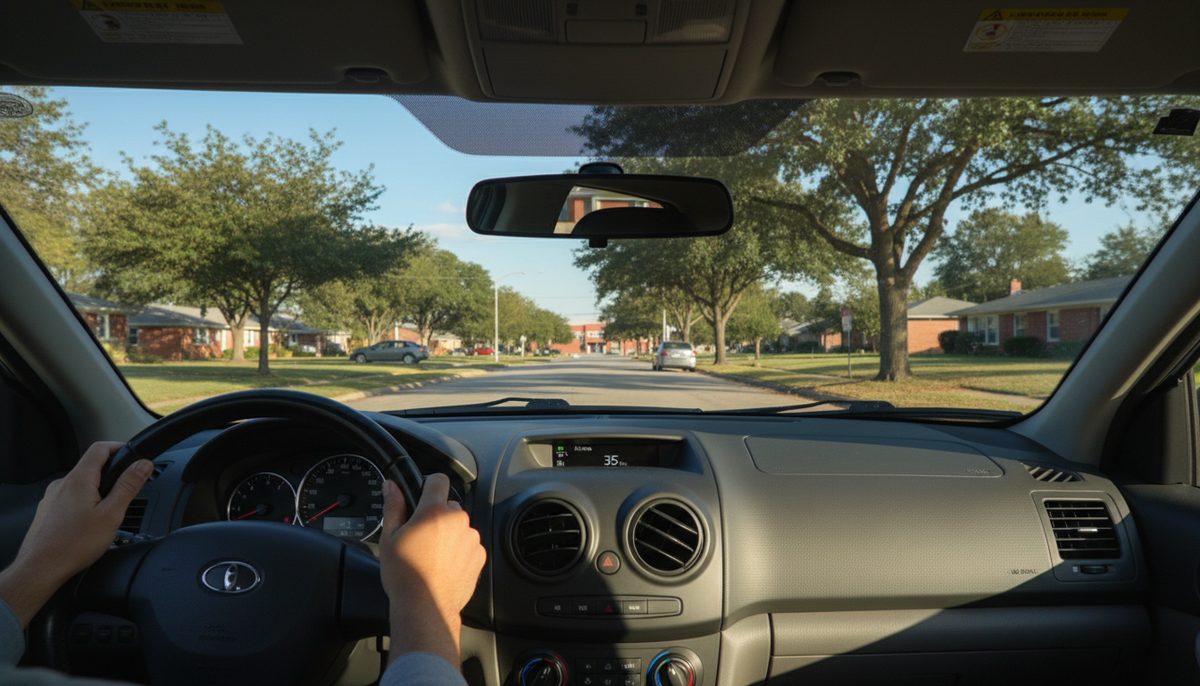
Here's the scene to avoid: you've negotiated the car, you're in the finance office, and someone says "we just need proof of insurance." Now you're buying coverage under time pressure, on your phone, from the first company that answers. That's the single most expensive way to buy insurance. The fix is doing it backwards — coverage first, car second.
Why dealers demand proof of insurance
You can't legally drive off the lot uninsured, and if you're financing, the lender requires full coverage from mile zero. Dealers will happily wait while you scramble — or steer you toward whatever gets papers signed fastest. Neither is your friend.
Auto World Insurance Services keeps a statewide guide to how to get car insurance in California that covers the DMV side in more detail.
What they'll actually ask for is narrower than people expect: proof that a policy exists on that specific vehicle, usually an insurance ID card or a declarations page showing your name and the VIN. If you're financing, the lender also has to appear on the policy as lienholder or loss payee, with comprehensive and collision on it. That's a loan condition rather than a legal one, and it applies from the day you take the car.
The right sequence
- Quote before you shop. A licensed agent can price the 2–3 models you're considering — insurance cost differs between them more than people expect, and it might even change which car you pick.
- Pick the winner carrier with every first-timer discount applied.
- Buy the car, call the agent with the VIN — the policy binds same-day and proof of insurance hits your email before the finance office finishes its coffee.
Have four things ready when you call: the VIN, the purchase price, the address where the car will be parked overnight, and the lienholder's name and mailing address if there's a loan. With those in hand a policy can usually be bound and the proof emailed while you're still at the dealership.
First-buyer notes
Three things come up on nearly every first-car call we take:
- Financing? Ask about gap coverage while the loan exceeds the car's value — it covers the difference if the car is totaled early.
- The car changes the price. Between two similar used cars, the cheaper-to-repair one is often meaningfully cheaper to insure — worth checking before you commit.
- No insurance history? In California that alone cannot set your price (Insurance Code section 1861.02(c)). Years licensed and your record are what count, and companies weigh them differently — exactly the kind of spread a multi-carrier comparison catches.
If you're buying from a private party
A private sale loses you the dealership's paperwork department, and the deadlines become yours. Vehicle Code section 5902 gives you 10 days after taking delivery to submit the transfer application to the DMV, and the seller files a notice of transfer of their own. The insurance side doesn't change: the car has to be covered before you drive it home, which means calling with the VIN before money changes hands rather than after.
Get this quoted for your situation
Free quotes from multiple carriers, prepared by a licensed California agent. Two minutes, no obligation.
Get My First QuoteQuick answers
Can I get insurance before I own the car?
Yes — an agent can quote the exact models you're considering, then bind the policy the day you buy with the VIN. Proof of insurance is emailed same-day for the dealer.
Does the car I choose really change the insurance price?
Meaningfully, yes — repair costs, safety ratings, and theft rates all feed the premium. Between two similar cars, the insurance difference can be a deciding factor.
What is gap coverage and do I need it?
It covers the difference between what you owe and what the car is worth if it's totaled — most relevant early in a loan with a small down payment. Financed first cars should at least price it.