A first policy is worth shopping
With no driving history to go on, carriers price a new licensee very differently from one another. Being independent means we can ask several of them instead of arguing for one.

New license? First car? Every insurance site assumes you already know how this works. We don't. Here's the whole process, and a licensed agent who compares multiple carriers to find the ones that actually welcome new drivers.
Free · No experience required · Real agent help
Never done this before? That is fine. Nothing here asks for a payment method and nothing you type is a commitment.

No testimonials and no made-up numbers — just what happens when a new driver rings this office.
With no driving history to go on, carriers price a new licensee very differently from one another. Being independent means we can ask several of them instead of arguing for one.
Deductible, liability limits, permissive use, being listed on a parent’s policy — ask about any of it. Talking a first-time buyer through the wording is genuinely the part of this job we like.
If a dealership or a lender wants paperwork before you can drive the car away, say so on the call. We can normally bind a policy the same day and email your ID cards.
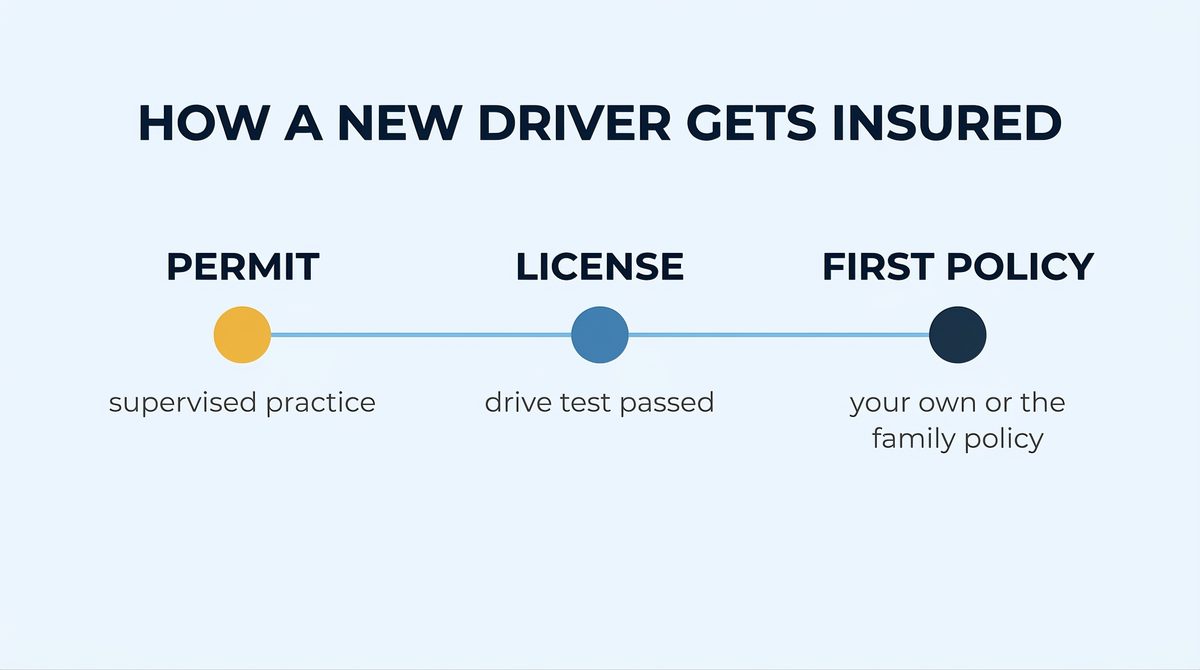
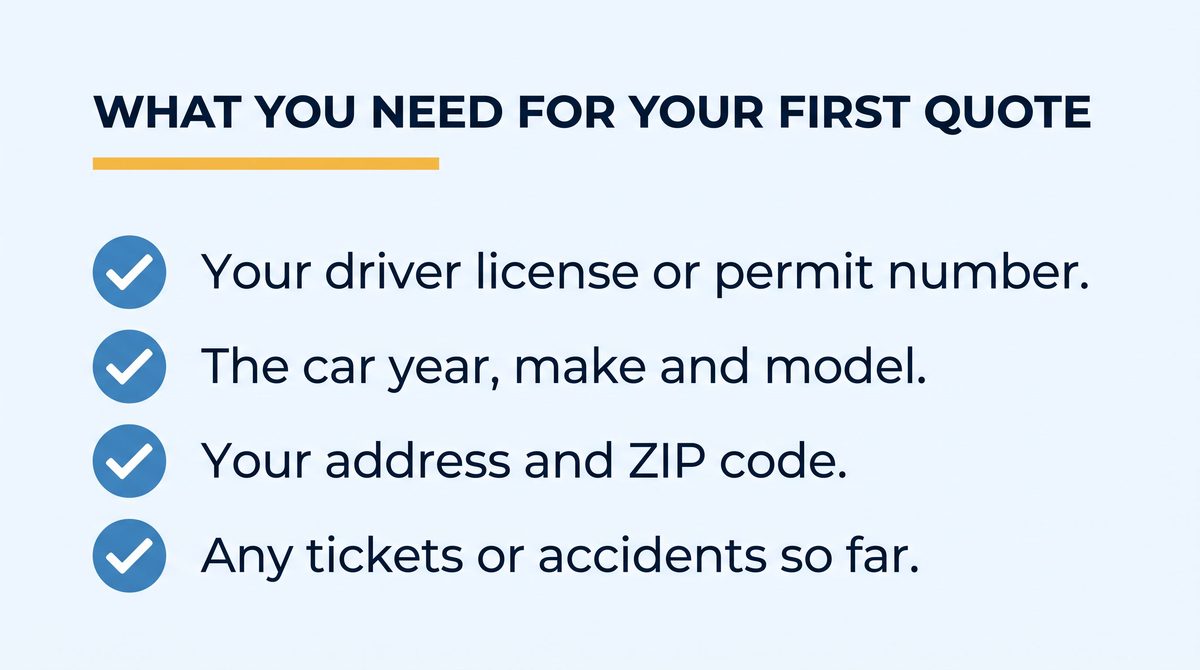
Worth a look before you start typing. Neither of these is a rule about any particular carrier — they are just how the sequence usually runs.
Insurance pricing runs on history, and a new driver doesn't have one. With no record to judge, carriers price cautiously — regardless of your age. A 35-year-old with a brand-new license faces the same problem a 17-year-old does: the company is guessing.
The good news is that carriers guess very differently. Some price new drivers as a routine risk; others price them away on purpose. From the outside you can't tell which is which, so comparing multiple companies matters more for a first policy than for almost any renewal.
What actually lowers a first premium: joining a parent or household policy when you live at the same address, good-student discounts, an approved driver's training course, telematics programs that watch how you actually drive, and choosing a sensible first car — older, safe, and cheap to repair beats fast and flashy on every insurance math sheet.

More than for experienced drivers — carriers have no history to price against. But the spread between companies is large for new drivers specifically, which is exactly why comparing multiple carriers before buying is worth the two minutes.
Yes — carriers can commonly bind coverage same-day, and the dealer will require proof of insurance before you drive off. Quoting before you go car shopping means you're not making a rushed decision at the dealership.
Generally you're covered under the policy of the licensed adult supervising you — often a parent's policy. Once you're fully licensed, you need to be listed on a policy: your household's or your own.
Enter a teen's birth date and license date to see when the first-year night and passenger restrictions end, their 18th birthday, and the first date they could meet the Good Driver test.
Published by Auto World Insurance Services, a licensed California insurance broker (#6005606). How these pages are written and checked.